
What is a Process Owner and why does it reduce ERP risk?
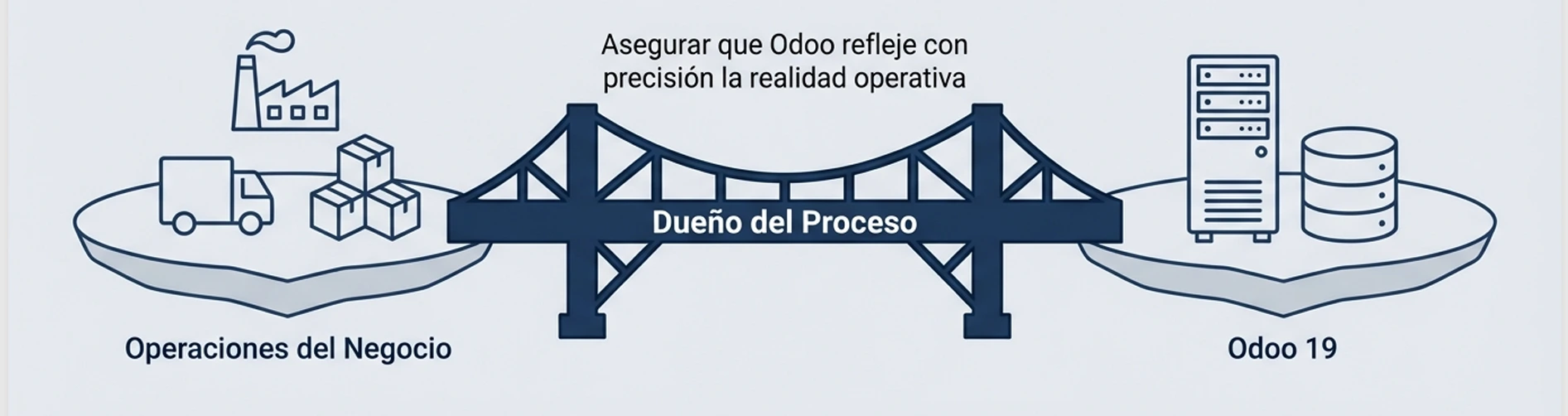
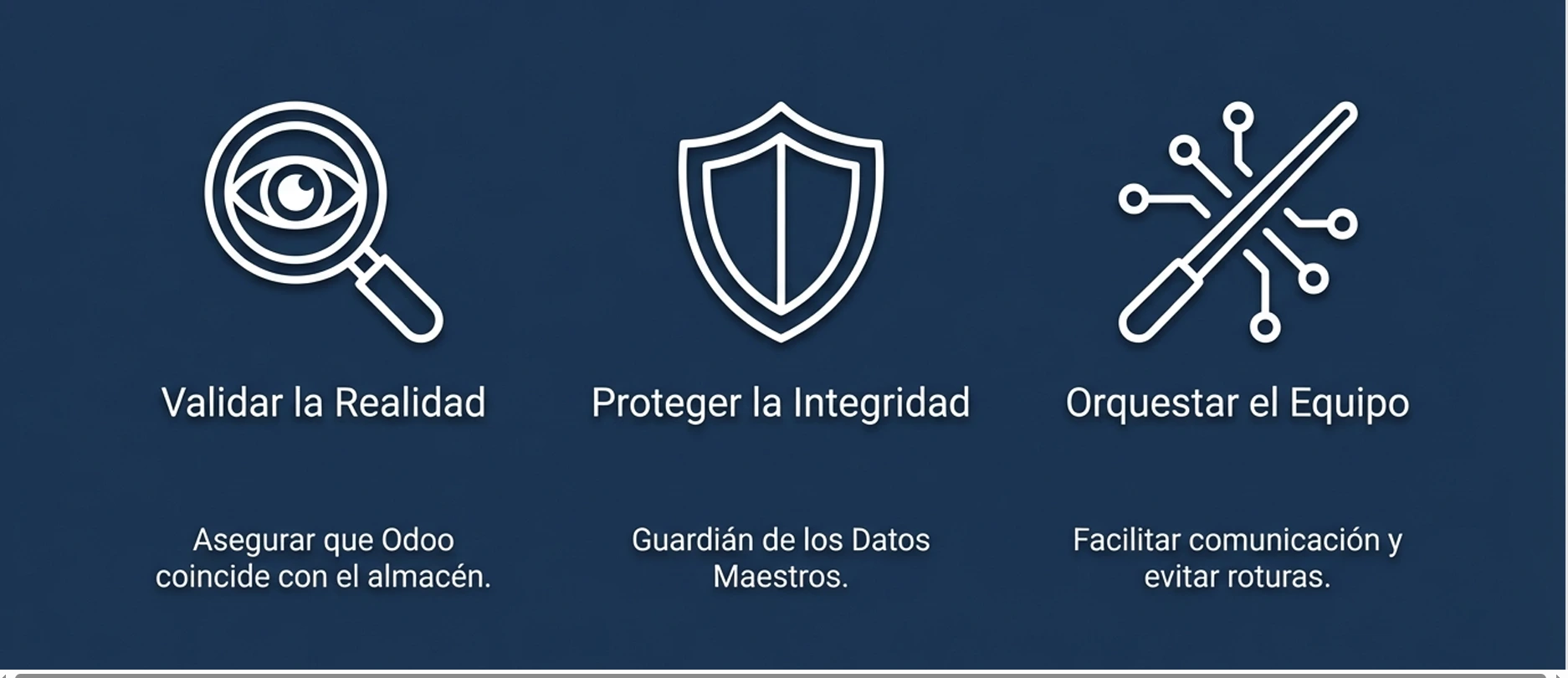
The Process Owner is the bridge between operations and systems: they prioritize requirements, validate functional configurations, and resolve conflicts between areas. The important aspect is the control pattern: they can adjust operational parameters (routes, locations, production flow) without having critical technical privileges (taxes, accounting entries, sensitive tax configurations), which supports segregation of duties and internal control.
In terms of internal control, separating responsibilities and prioritizing the "least privilege" is a widely promoted practice in internal auditing to reduce errors and exposure to fraud.
End-to-end visibility with O2C and P2P
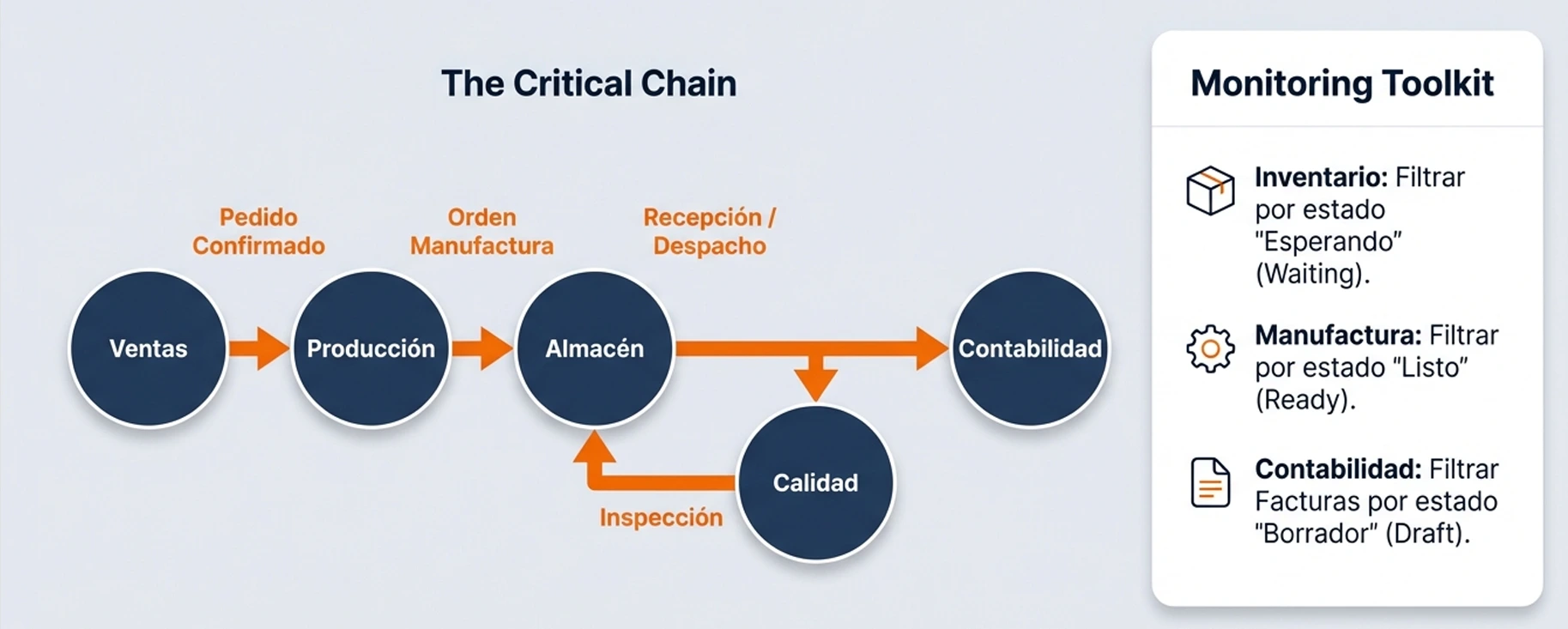
An ERP creates value when areas connect seamlessly. The manual proposes to map and govern two critical chains:
- Order-to-Cash (O2C): from quotation/order to delivery, invoicing, and collection.
- Procure-to-Pay (P2P): from requisition/RFQ and purchase order to receipt, inspection, supplier invoice, and payment.
This “end-to-end” vision prevents each department from optimizing “its piece” and breaking the complete flow. Additionally, it is recommended to audit transactions by reviewing the linked documents (order → delivery → invoice → payment / PO → receipt → supplier invoice → payment) to detect breaks early.

Master data that doesn't sabotage your project
The manual is clear: the quality of master data is a major risk to the success of the ERP. "Business translation": if you have duplicate suppliers, poorly named products, or incorrect bill of materials, you will end up making poor purchases, losing traceability, and distrusting reports.
Reusable best practices for any industry:
- Naming conventions (document example: "Willow - Hot Pepper - 350ml") and unique internal references.
- Anti-duplication rules (search by identifier before creating; uniqueness by entity).
- Versioned BoMs by dates and with approval before productive use.
- Monthly hygiene (orphan products, inactive suppliers, BoM consistency, location order).
In Odoo, the discipline of locations/warehouse is based on the very notion of locations as specific spaces (shelf, aisle, room), which can be enabled and configured from Inventory.
Approval matrix for the ERP to be auditable and scalable
When a company grows, the ERP must scale without relying on "heroes." The manual proposes an approval matrix that defines who approves what (by type of transaction and threshold) to ensure segregation of duties: no one should initiate and completely close a critical transaction without oversight.
Mini-case (from the file): approvals for purchase orders are defined by threshold (RD$), inventory adjustments with cost impact, credit notes, and operational additions/modifications (such as suppliers or BoMs). Beyond the amount, the replicable idea is: clear policies + approval trail + consistent compliance.
Change management without surprises (Request → Test → Deploy)
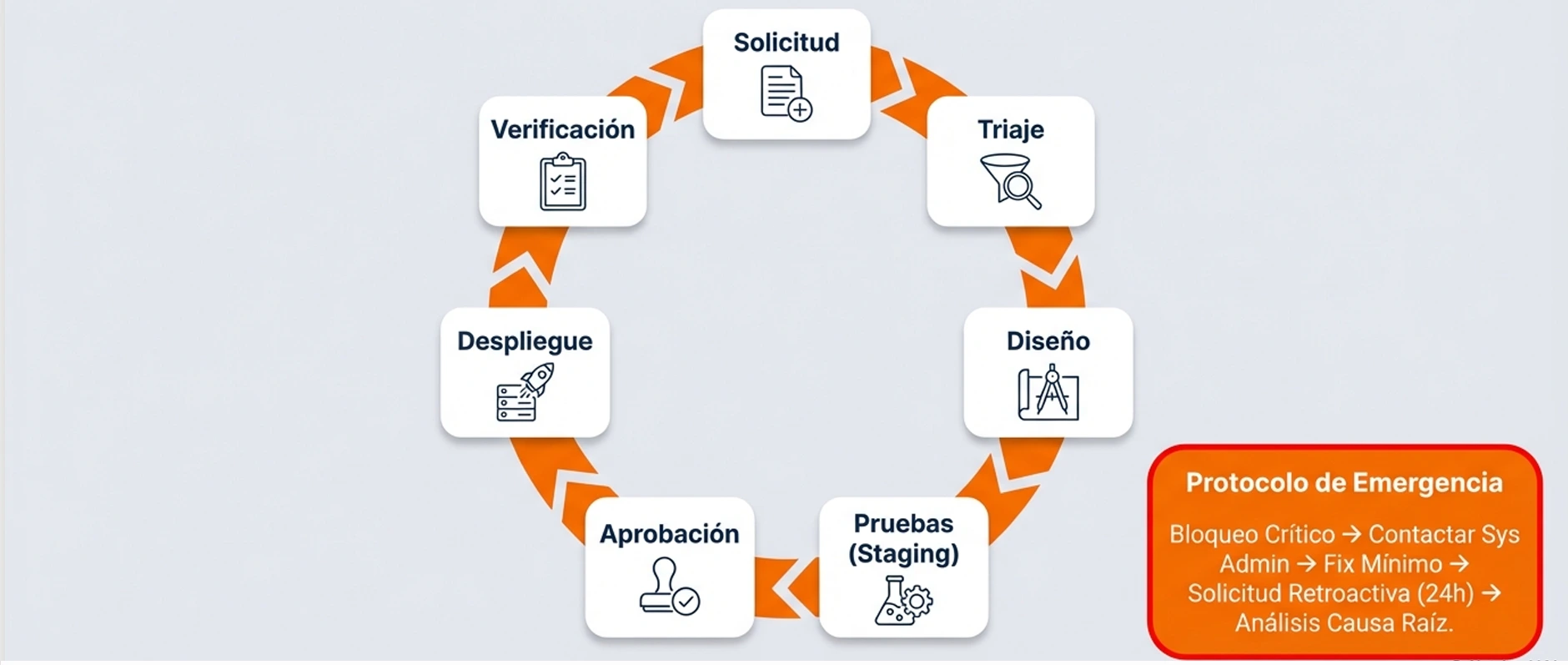
A recurring cause of "ERP trauma" is improvised changes: configurations that are altered in production and break billing, inventory, or manufacturing. The manual formalizes a change cycle: request, prioritization (triage), design, testing in staging, approval (sign-off), deployment, and post-deploy verification. It also includes emergency changes with subsequent control (formalization and root cause)..
This connects with Odoo's modular approach: sales, purchases, inventory, manufacturing, and finance are not isolated; changes must be evaluated for their impact on the entire flow.
Weekly KPIs to sustain the ERP ROI
The “go-live” is not the end: it is the beginning. The manual recommends a brief weekly review (30 min) led by the Process Owner and area managers, with KPIs and an action plan. It includes specific goals such as:
- OTD (On-Time Delivery) ≥ 95%
- Purchase lead time ≤ 5 days (local)
- Production yield ≥ 97%
- Inventory accuracy ≥ 98%
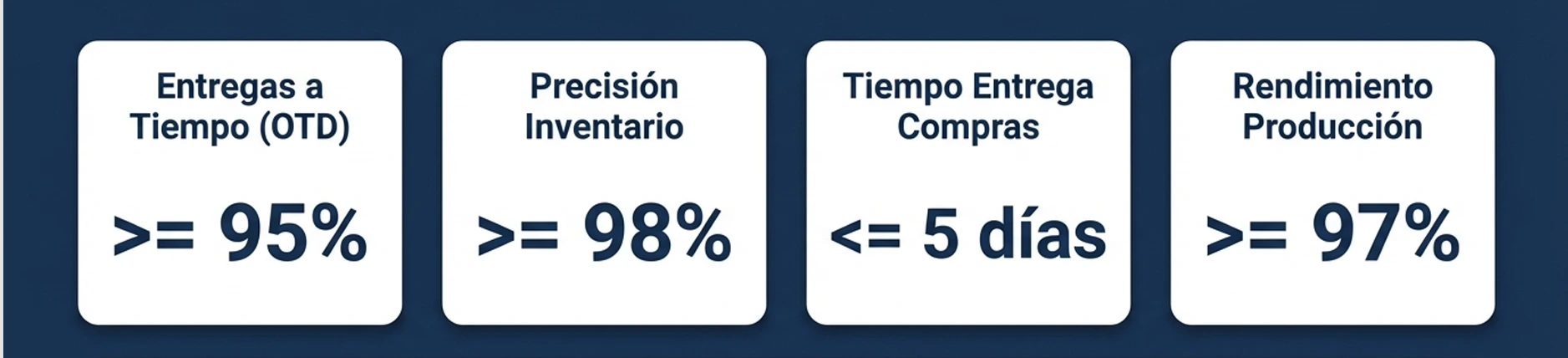
The key point for clients: each KPI has a "where to see it" in Odoo and a responsible owner. This turns the ERP into a management system, not just a recording system.
Optional module for clients in the Dominican Republic: DGII compliance and electronic invoicing
If your operation is in the Dominican Republic or invoices under DGII, the governance of the ERP must include tax invoicing. DGII defines the Electronic Fiscal Receipt (e-CF) and its regulatory framework (General Rule 05-2019 and associated requirements), as well as the structure of the e-NCF..
The DGII also explains what a tax receipt/NCF is as a document that certifies the transfer of goods or the provision of services, and that must comply with current regulations..
In frequently asked questions, DGII indicates operational requirements such as the use of software that generates the standard format (XML) and prior authorization to issue e-CF.
In the manual, this concern is reflected in data rules (RNC/ID) and limitations on access to sensitive tax configurations.
Conclusion
Implementing Odoo (or any ERP) is not just about installing modules: it is ensuring that processes, data, controls, and changes are governed. The role of Process Owner (ERP Product Owner) acts as the practical assurance that the ERP reflects reality, supports improvement with KPIs, and reduces operational and compliance risk.
Schedule a Consultation
Our team is ready to address your questions and concerns.